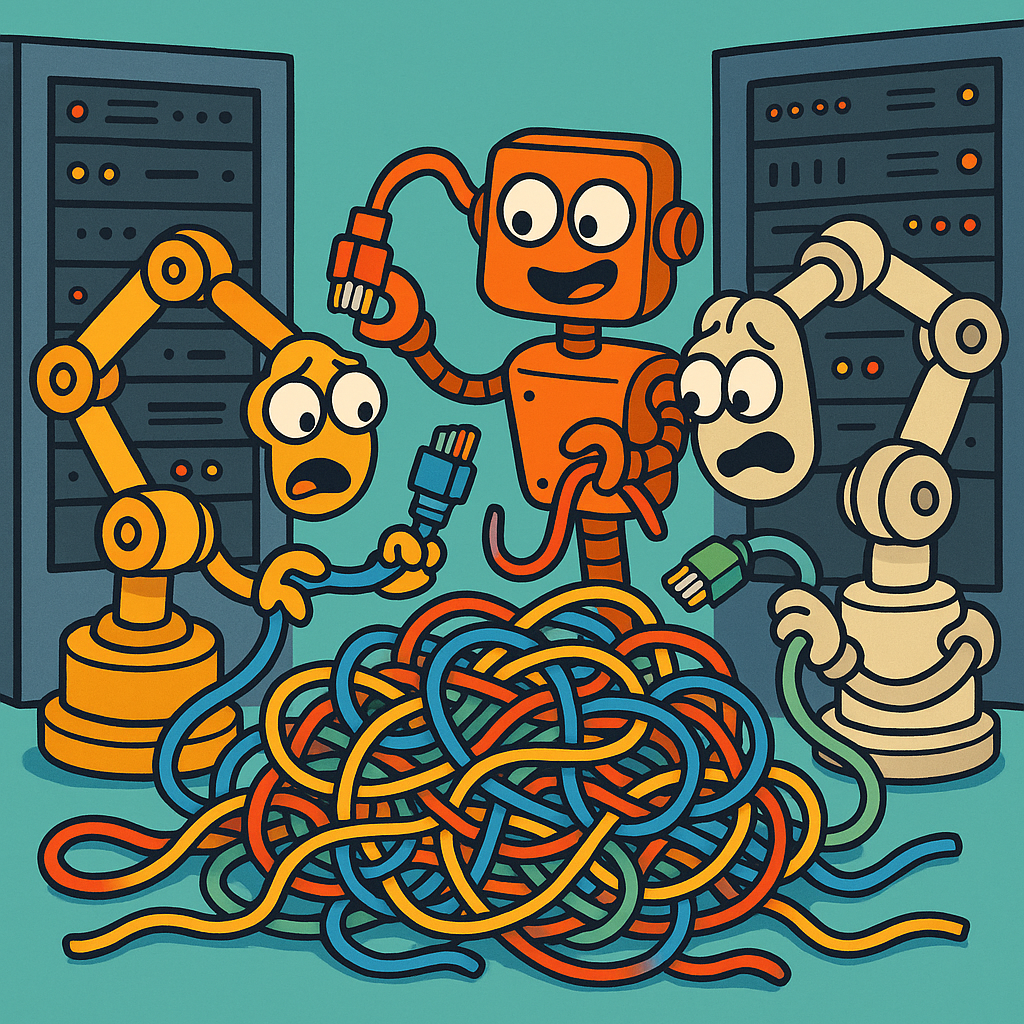
Imagine your AI assistant creating more chaos than clarity because of the rules you’ve loaded into it. According to Cisco Blogs, researchers are diving deep into whether these so-called “learned rules” actually alter what our digital helpers spit out. Spoiler alert: it’s a whole lot of theoretical stuff that brushes up against the reality we all live in, which is—surprise!. far messier.
In This Article
Key Takeaways
- Learned rules may create more confusion than clarity.
- Tech companies often avoid accountability for flawed AI behaviors.
- The focus on theoretical improvements risks ignoring practical failures.
- Public trust in AIs hinges on transparency—something still lacking.
Here’s where it gets spicy: while they’re busy proving their point, the rest of us are stuck trying to decode how our virtual minions can mess up even the simplest tasks despite a million guidelines. Consider this: is there a point where all these rules just get tangled into a digital spaghetti mess that no one understands?
What Actually Happened
The Cisco post explores whether implementing learned rules actually changes the outputs from AI assistants. It’s part four of their “Security Loop Series,” focusing on practical outcomes from theoretical frameworks. The team presumably put these rules through rigorous testing to see if they made any tangible difference in AI performance. However, without full access to any quantitative data or widespread user testimonials, it’s hard to ascertain if this academic exercise translates into real-world improvements—or more obfuscation.
The Take Nobody’s Saying Out Loud
The uncomfortable read here is that this exercise might be akin to rearranging deck chairs on the Titanic. Are we really to believe that learned rules will solve fundamental flaws in AI’s ability to understand context? The truth is, as long as machines rely on human input—and humans make mistakes. we’ll see more rule-based confusion than clarity. In plain terms, we can slap on as many learned rules as we want; if the foundational data and algorithms are riddled with flaws, we’re just polishing a turd.
Why This Matters More Than The Headlines Suggest
This isn’t just a tech story; it’s about power dynamics between human creators and their creations. Continuous tinkering with “rules” suggests that tech firms may not be ready to take accountability for AI errors, pushing instead for an endless cycle of patchwork solutions that don’t address underlying issues like bias and miscommunication. If we’re led to believe that more complex layers of programming will shield us from potential disasters, we might just be handing over even more control to systems that misunderstand us completely.
The Skeptic’s Case
On the flip side, some might argue that more learned rules are necessary steps towards achieving functional AI interactions and reducing errors over time. Maybe this leads to eventual improvements as machine learning systems train on increasingly sophisticated datasets while feedback loops tighten up accuracy. here’s where we stand: good intentions don’t guarantee effective outcomes, and industry love for theoretical optimism often overshadows practical failures.
What Happens Next
- Watch for upcoming studies similar to Cisco’s—they’ll likely claim success without solid metrics.
- Be on the lookout for case studies where companies implement learned rules but still experience glaring failures.
- Monitor public sentiment regarding trust in AI assistants; major mess-ups could spark backlash against rule-laden approaches.
- Keep an eye out for regulatory moves aimed at setting standards around AI transparency—if they ever materialize.
If this is truly the best we can do with learned rules today, then brace yourselves for future frustrations—AI confusion isn’t going anywhere anytime soon!
This isn’t just about writing better outputs; it’s about why our AIs keep getting it wrong in the first place—and nobody wants to talk about it!
Frequently Asked Questions
What are learned rules in AI?
Learned rules refer to guidelines or patterns an AI system implements to influence outputs based on past training data.
Why do AIs still make mistakes?
AIs can err due to flawed training data or complex contexts not adequately captured by existing algorithms.
How does Cisco test its AI models?
Cisco appears to engage in rigorous assessments of implemented changes but lacks transparent metrics showing real-world impact from these tests.
Can learned rules improve AI communication?
‘Improvement’ is subjective. While they might refine outputs, inconsistencies in understanding remain a significant barrier.
Related Coverage
📚 Sources & References
All primary sources linked so you can verify every claim. This article is not financial advice.
Disclosure: This article is market analysis and reporting, not financial advice. Cryptocurrency markets are volatile and you can lose money. Do your own research and consult a qualified financial professional before making investment decisions. Catatonic Times does not hold undisclosed positions in assets covered on the day of publication.