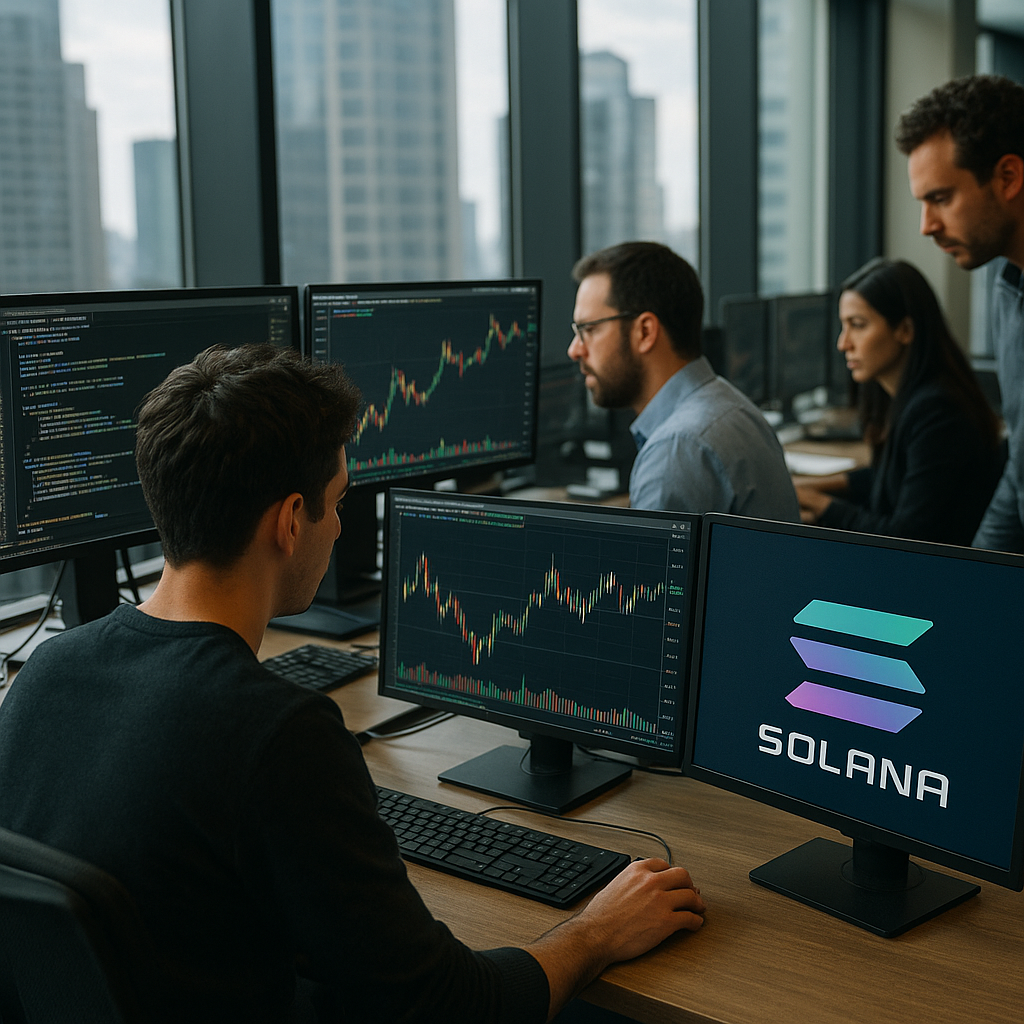
1.56 billion transactions — Solana’s churned through them since its start. As of September 26, 2026, CoinDesk reported on Solana’s newest upgrade, which aims to slash settlement time down to a mere 150 milliseconds. It’s now live on two public test nets.
In This Article
Key Takeaways
- The Alpenglow upgrade cuts settlement times sharply.
- Faster transactions might draw in more DeFi projects.
- Developer sentiment is key for adoption.
- $120 is where SOL stands right now.
- $100 holds as a crucial support mark.
Quick Answer
<b>Solana's recent upgrade slashes settlement times from roughly 400ms down to</b> <b>150ms via the Alpenglow initiative.</b> Reports from CoinDesk indicate<i>this puts it in a strong position with respect to DeFi while possibly boosting traffic to its infrastructure.</i>
To keep it simple: this update could reshape decentralized finance (DeFi) by luring projects eager for speed and efficiency. Or not—depends who you ask.
What Happened with the Upgrade?
Alpenglow is now running on these test networks, offering developers the chance to trial applications before shifting to the main network. This comes at a critical time when smart contract platforms face fierce competition. With Ethereum still grappling with issues, can Solana make use of this advantage?
This upgrade means not just faster transaction speeds but also a better user experience across various dApps (decentralized applications). It lets developers focus on creating solid applications instead of struggling with slow transaction times, a common problem in today’s DeFi platforms.

Why It Matters for Solana and DeFi
Reducing the settlement speed from roughly 400 milliseconds to just 150 milliseconds impacts Solana’s role in DeFi significantly. Faster confirmations and increased throughput are key for high-frequency trading and other time-sensitive activities.
The importance extends beyond just speedy transactions; it builds trust. Developers are unlikely to choose networks with delays or reliability issues. So far, projects like Serum and Mango Markets have thrived on Solana thanks to its current performance metrics.
As of press time, major competitors—notably Ethereum. are still dealing with gas fees after their proof-of-stake transition. The pressure stays high as Ethereum adjusts post-Merge in September 2022 (we’ve tracked this closely). In contrast, Solana’s seamless features might draw liquidity from ETH-based services for quicker alternatives.
The Market Dynamics That Others Might Miss
Looking at past successful technological upgrades—like Ethereum’s London Hard Fork. we notice immediate user activity spikes after implementation. If Solana mimics those patterns upon full rollout, anticipate new liquidity inflow into SOL tokens. now priced around $120.

Tactical Considerations Moving Forward
What This Means for Price Action
A dip below $100 would trigger our invalidation condition; meaning further assessment would need reevaluation based on broader market behavior around Bitcoin and Ethereum’s future movements.
If It Were My Money…
- We’d watch development updates from test networks moving into November as they could provide key insights by then.
- Understanding if there’s steady growth after full deployment will help decide whether to hold until mid-2027 confidently.
- If SOL can’t consistently stay above $105 amid larger crypto trends—it might warrant reassessing positions.
Frequently Asked Questions
What is Solana’s settlement upgrade?
Solana’s new settlement upgrade cuts transaction time to just 150 milliseconds, boosting overall efficiency.
How does this impact DeFi applications?
The speedier processing times offer better user experiences, potentially prompting more projects to choose Solana as their go-to platform.
What effect will this have on SOL price?
$120 acts as support right now, with potential growth if developer activity increases after the update; pay attention to resistance around $140.
{Is there existing competition?}
{Yes, there are existing competitors like Ethereum, which continues dealing with gas fee issues even after last year’s shift to a proof-of-stake model.}
⚠️ Not Financial Advice: Everything above — including any price outlooks, scenarios, or forecasts. is independent research, analysis, and opinion. It is not investment, legal, or tax advice. Crypto assets are volatile and you can lose your entire investment. Always do your own research and consult a licensed professional before making financial decisions.
📚 Go deeper: this article is part of our Defi coverage — start with DeFi News: Protocols, Stablecoins & Yield.
Related Coverage
📚 Sources & References
All primary sources linked so you can verify every claim. This article is not financial advice.
Disclosure: This article is market analysis and reporting, not financial advice. Cryptocurrency markets are volatile and you can lose money. Do your own research and consult a qualified financial professional before making investment decisions. Catatonic Times does not hold undisclosed positions in assets covered on the day of publication.