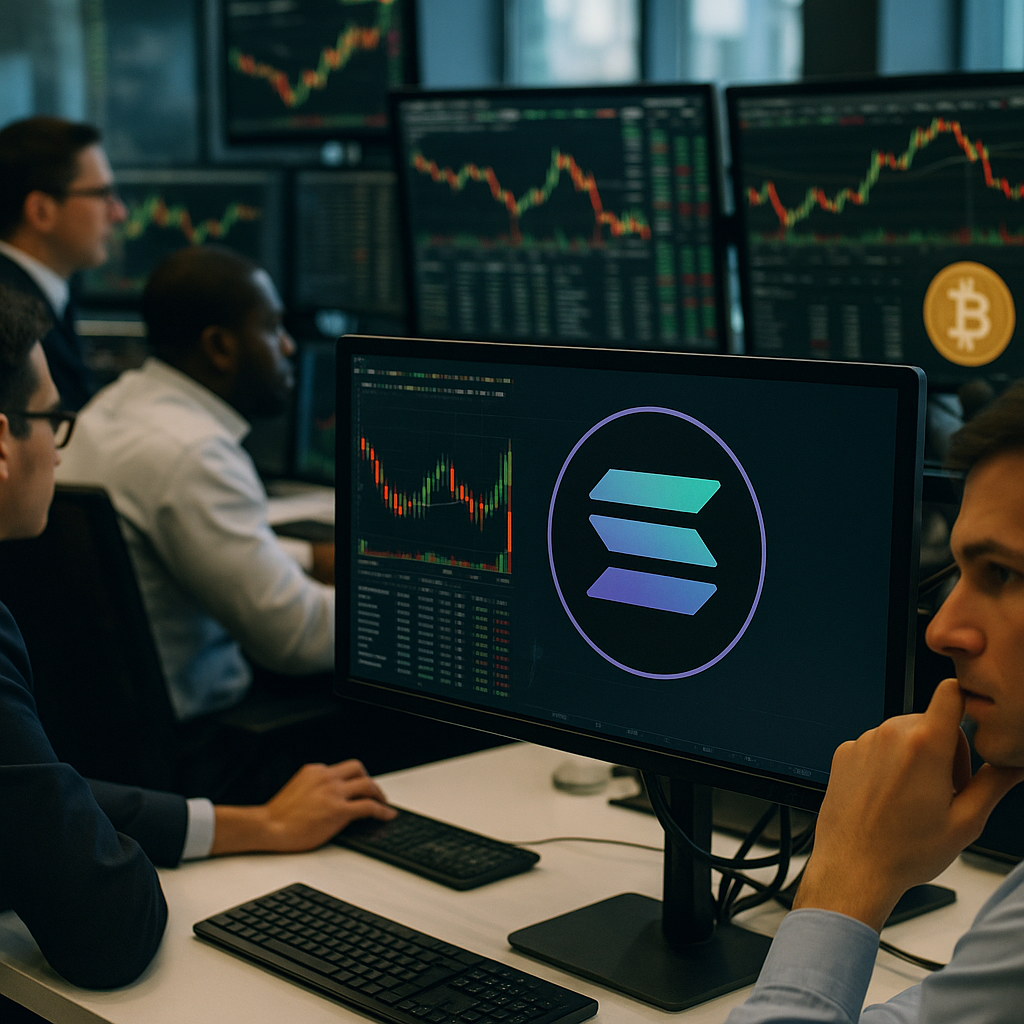
What happened with the Solana Network?
The short answer is: a significant routing error known as the Teraswitch failure took 29% of the Solana network stake offline. According to CryptoSlate, this failure occurred just hours ago on September 16, 2026, and while it didn’t push the network past its finality-halt threshold, the repercussions were notable. Independent telemetry indicated delays in finality alongside sharply reduced throughput.
In essence, nearly a third of Solana’s total stake felt the impact — an alarming figure for a protocol that’s been trying to position itself as scalable amidst rising competition in decentralized finance (DeFi).
Why does this matter for Solana?
The implications of this incident aren’t merely technical; they touch on broader themes around reliability and trust in blockchain infrastructure. As more users flock to DeFi platforms looking for higher yields and quicker transactions, any disruption — such as one affecting almost one-third of the stake. raises valid concerns regarding Solana’s operational robustness.
Network outages or slowdowns can deter developers from building on Solana or cause existing users to question its reliability. Notably, the ecosystem has been advocating for enhanced scalability solutions following previous setbacks.
Investors are rightfully concerned about whether this incident erodes confidence. If history teaches us anything about crypto sentiment, it’s that price is a lagging indicator of conviction. With Solana currently trading at $96.9 (down roughly 4% in the last day), we wonder how long this incident will resonate across markets.
What are market participants missing?
While many rush to characterize this as a standalone incident, we should zoom out and consider previous network failures in context. Over time, Solana has faced various downtimes that have curbed enthusiasm among investors and developers alike. The critical vulnerability exposed by this event raises questions about both systemic design flaws and governance issues within the protocol.
For instance, after incidents like these—where significant portions of staked tokens become effectively unusable. underlying fears could arise regarding governance decisions (or lack thereof) on software updates or infrastructural changes needed to mitigate future risks.
while some may argue these failures are isolated events due to routing complications, consistent performance issues could lead to deeper structural problems within Solana’s architecture.
What might happen next?
Our read suggests that if confidence wavers further among developers or institutional investors post-Teraswitch failure, we might be looking at tighter ranges for SOL’s price action in upcoming weeks. As it stands now, resistance levels could form around $100-$105 based on historical behavior during similar events while support appears solid below $90.
Should SOL close below those support levels significantly (for us that means under $90), we’d be surprised if it doesn’t take an additional hit towards lower bounds near $80 or even challenge range lows around $58 (given recent performance metrics). The desk maintains that patience is usually rewarded during chaotic moments like these.
In contrast, if a clear fix is presented rapidly via updates from developers or governance proposals that restore stakeholder confidence by illustrating stronger resilience against such failures in future scenarios—it might yet hold up above current support levels.
Data Snapshot
As of September 16:
In This Article
Key Takeaways
- A routing error took down 29% of Solana’s stake.
- This incident raises concerns over network reliability.
- Previous failures may affect future investor confidence.
- SOL price could test lower ranges if support fails.
- Patience often proves beneficial during market chaos.
- Bitcoin (BTC): $75,744
- Ethereum (ETH): $2,399
- Solana (SOL): $96.9
- Total Market Cap: Approximately $1T
- Treasury DeFi Holdings: Falling by ~4% pre-Teraswitch news

If it were our money…
We’re viewing conditions as cautiously optimistic yet inherently risky, given Solana’s recent troubles. Watching technical recovery and community sentiment shifts closely as development teams communicate ongoing issues.
Definitely keep an eye on staking metrics. A dip signals a potential exit from SOL pools post-outage.
Clarity on fixes is vital; without that, further investments need caution until stability assurances are clear.

h2>
The Bottom Line
The Teraswitch failure shows cracks in Solana’s architecture and sparks important debates about its scalability with increased adoption.
If it were my money
This isn’t just about headlines. We need to know if our risk-reward view holds after considering all evidence, uncertainty, and costs. If confident, we’d seek better on-chain signals, clearer governance, and defined exit triggers for quick decisions.
Practically, we’d size positions carefully and base decisions on new info—not momentum. One story or price move isn’t directional proof. Irrational markets last longer than assumed; process tops headlines. We’d feel easier with firmer fundamentals over mere narratives.
Frequently Asked Questions
What caused the Teraswitch failure?
The Teraswitch error impacted almost one-third of the staked tokens due to a single routing mishap.
How much of Solana’s stake was affected?
About 29% of total stake got knocked offline by this routing error.
What are potential impacts on SOL price?
If confidence dips further after this failure and SOL falls under key support around $90, expect more downward pressure.
How does this compare with past incidents?
‘This event mirrors prior outages which raised flags about stability; essential for assessing future adoption.’
⚠️ Not Financial Advice: Everything above — including any price outlooks, scenarios, or forecasts. is independent research, analysis, and opinion. It is not investment, legal, or tax advice. Crypto assets are volatile and you can lose your entire investment. Always do your own research and consult a licensed professional before making financial decisions.
Related Coverage
📚 Sources & References
All primary sources linked so you can verify every claim. This article is not financial advice.
Disclosure: This article is market analysis and reporting, not financial advice. Cryptocurrency markets are volatile and you can lose money. Do your own research and consult a qualified financial professional before making investment decisions. Catatonic Times does not hold undisclosed positions in assets covered on the day of publication.